We don’t learn from people we don’t know.
And when the person teaching us does not know us, or even try to know us, our motivation to learn can quickly disappear.
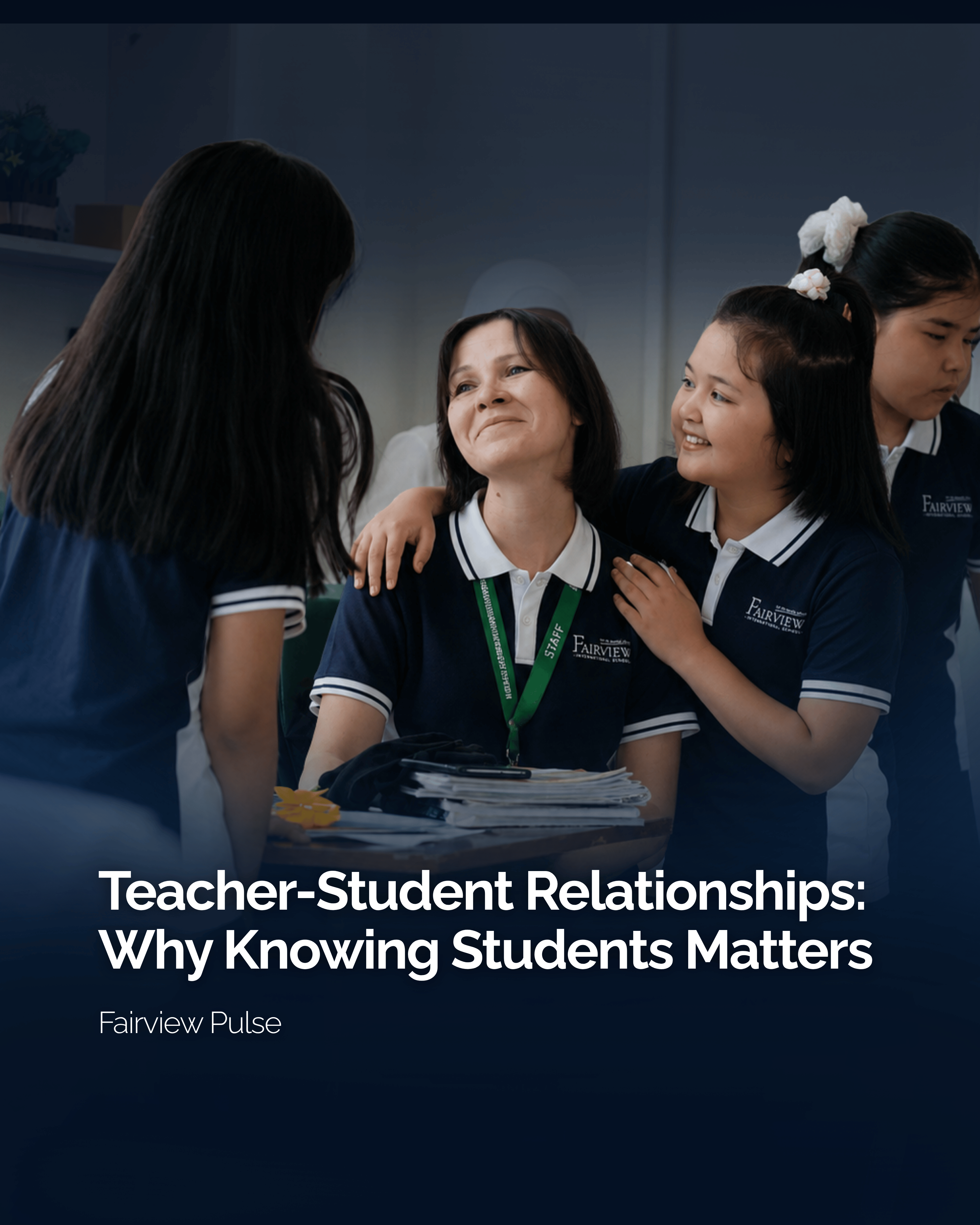
Teaching is not only about delivering the right content. It is also about understanding the people sitting in front of us. When teachers know their students’ interests, strengths, challenges and aspirations, they can create learning experiences that feel more relevant and meaningful.
So, how can teachers get to know their students better?
Here are two simple approaches.
The Story of James and Ms. Carter
Ms. Carter was a dedicated Maths teacher who noticed that one of her students, James, was struggling with algebra.
She could have simply pressed ahead with the syllabus. Instead, she decided to find out more about him.
During a conversation, she discovered that James loved planes and dreamed of building one someday.
So, Ms. Carter began connecting some of her algebra questions to planes and aviation.
Suddenly, algebra felt different.
James could see a connection between what he was learning in the classroom and something he genuinely cared about. He became more willing to participate, ask questions and engage with the problems in front of him.
James took off.
Mind the pun.
The lesson was simple: sometimes, helping a student learn begins with taking the time to understand what matters to them.
Why Knowing Your Students Matters
Every student enters the classroom with a different combination of experiences, interests, strengths and challenges.
Two students may sit through exactly the same lesson but respond to it in completely different ways.
One may immediately understand the concept. Another may need more time. One may become excited by a real-world problem. Another may respond better to a practical activity or a connection to a personal interest.
When teachers understand these differences, they can make more informed decisions about how they teach.
This does not mean creating a completely different lesson for every student.
Instead, it means knowing enough about your learners to make learning more relevant, accessible and engaging.
Research consistently highlights the importance of positive teacher-student relationships. A 2025 systematic review published in Psychological Bulletin examined more than 70 years of educational research and found meaningful relationships between teacher-student relationships and outcomes including academic achievement, motivation, engagement, school belonging and wellbeing. Read the research on teacher-student relationships
Earlier research has also found that closer teacher-student relationships are associated with stronger academic, social and behavioural outcomes as students progress through school. Read the Journal of Applied Developmental Psychology study
Knowing students well is therefore not simply about building rapport.
It can become an important part of effective teaching.
Two Ways to Know Your Students Better
1. Explore Their Interests and Personalities
One way to learn more about students is to use structured tools that encourage them to reflect on their interests, preferences and personalities.
Personality frameworks can provide useful conversation starters. For example, teachers can explore how students prefer to approach group work, solve problems or communicate their ideas.
However, these tools should be used carefully.
A personality profile should never become a label that limits what a student can do. Instead, it can help teachers ask better questions and start conversations about how students prefer to learn and interact.
For example, if a student says they prefer time to think before speaking, a teacher might provide opportunities for individual reflection before asking students to share their ideas with the whole class.
The goal is not to put students into boxes.
The goal is to understand them better.
2. Explore Their Interests and Future Aspirations
Another useful approach is the RIASEC framework, which explores interests across six areas:
- Realistic
- Investigative
- Artistic
- Social
- Enterprising
- Conventional
The RIASEC framework is based on John Holland’s theory of career interests and can help students explore the types of activities and working environments that may appeal to them. Explore the RIASEC career framework
For example, a student with strong investigative interests may enjoy exploring scientific problems, analysing evidence or figuring out how something works.
A student with strong artistic interests may respond particularly well to opportunities involving creativity, design or self-expression.
These insights can help teachers connect classroom learning to students’ interests and potential future pathways.
More importantly, they can help students understand themselves.
From Knowing Students to Knowing How to Teach Them
The purpose of getting to know students is not to make teaching easier.
It is to make learning more meaningful.
When teachers understand what students care about, they can find better ways to connect new knowledge to the world around them.
When they understand students’ strengths and challenges, they can provide more appropriate support.
And when they understand students’ aspirations, they can help them see why what they are learning today might matter tomorrow.
This is particularly important in an education system that aims to develop more than academic achievement.
At Fairview International School, we believe students should develop the skills, confidence and independence they need to navigate life beyond the classroom. That requires teachers to see students not simply as names on a register, but as individuals with their own questions, interests, perspectives and ambitions.
Students Learn From People Who See Them
Good teaching starts with subject knowledge.
Great teaching goes further.
It starts with curiosity about the learner.
Who are they?
What matters to them?
What are they good at?
What challenges them?
What do they want to become?
The answers to these questions can change the way teachers approach their classrooms.
James did not suddenly become better at algebra because planes magically made mathematics easier.
He became more engaged because someone took the time to understand what mattered to him.
And sometimes, that is where meaningful learning begins.
Because before we ask students to learn from us, perhaps we should first make the effort to know them.
References
Emslander, V., Holzberger, D., Ofstad, S. B., Fischbach, A., & Scherer, R. (2025). Teacher-Student Relationships and Student Outcomes: A Systematic Second-Order Meta-Analytic Review. Psychological Bulletin, 151(3), 365–397. View the full research record
Ansari, A., Hofkens, T. L., & Pianta, R. C. (2020). Teacher-student relationships across the first seven years of education and adolescent outcomes. Journal of Applied Developmental Psychology, 71, 101200. View the full research article
CareerOneStop. Interest Assessment and RIASEC Career Interests. Explore the RIASEC framework
About Dr. Vincent Chian
Dr. Vincent Chian is Principal of Fairview International School Kuala Lumpur. His work focuses on educational leadership, lifelong learning and creating meaningful educational experiences that prepare students for life beyond examinations.