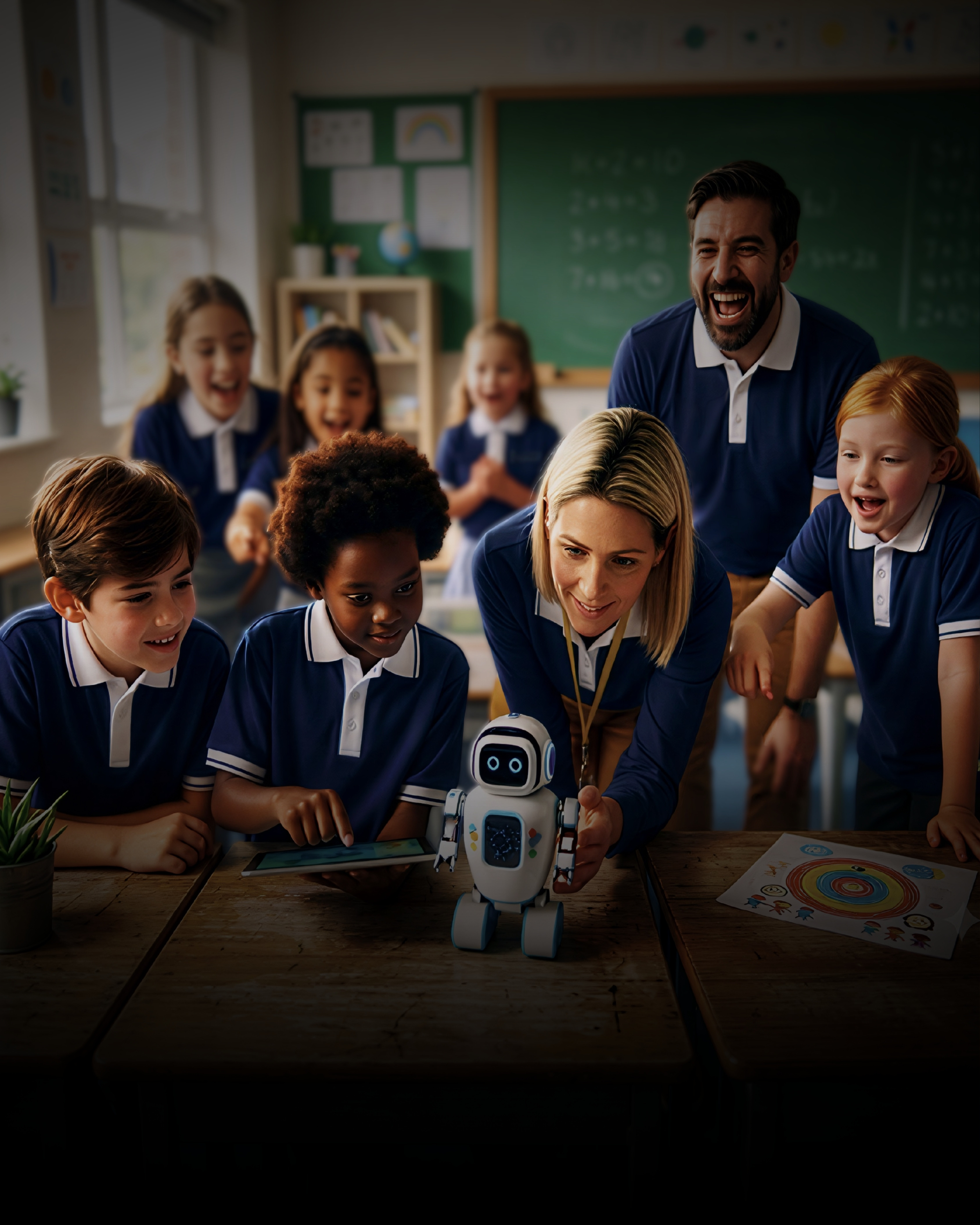
The IB programme in Malaysia is increasingly recognised for preparing students for a changing world.
The Problem
However, as artificial intelligence becomes part of everyday life, many classrooms are still figuring out how to integrate it meaningfully.
Children are already using AI through apps, search tools, and digital platforms. Yet in many schools, its role remains unclear or inconsistent.
For parents exploring an international school in KL or comparing international schools in Malaysia, this creates an important concern:
Is my child learning how to use technology, or how to truly understand it?
Without a clear approach, AI can easily become a distraction instead of a tool for deeper learning.
The Solution
In the IB programme in Malaysia, learning is built around inquiry, exploration, and real-world understanding.
This makes it a natural environment for integrating AI.
Instead of teaching AI as a separate subject, strong IB schools in Malaysia weave it into everyday learning. Students explore ideas, solve problems, and create using technology as part of the process.
Here are four practical ways AI can be introduced in the Primary Years.
1. Sparking Curiosity Through Storytelling and Play
Young learners engage best through exploration.
AI-powered storytelling and games allow students to interact with content that responds to their choices. This builds early understanding of logic, cause and effect, and decision-making.
Tools like Blockly help students explore simple coding concepts visually. Platforms such as Fabula allow children to create their own interactive stories.
This makes learning both engaging and meaningful.
2. Building Problem-Solving Through Coding Foundations
As students develop, structured thinking becomes more important.
Block-based coding introduces sequencing, patterns, and logical reasoning. These are essential foundations for understanding AI.
Platforms like Scratch and Code.org provide accessible entry points for young learners.
More importantly, they help students move from simply using technology to understanding how it works.
3. Supporting Language Development with AI Tools
AI can also strengthen language learning.
Adaptive platforms personalise content based on a student’s pace and ability, making learning more effective.
For example, Duolingo uses gamification and AI to build vocabulary and comprehension in an engaging way.
When combined with classroom teaching, this supports confidence and consistency in language development.
4. Encouraging Creativity Through AI in the Arts
Creativity remains essential in early education.
AI tools allow students to experiment with design, visuals, and digital expression.
Platforms like Kidgeni help students turn ideas into real designs. Tools such as Midjourney introduce them to new forms of creative exploration.
With guidance, students begin to see technology as something they can create with, not just consume.
The Benefit
When AI is integrated thoughtfully, students develop more than technical skills.
They build curiosity, confidence, and the ability to think independently.
This is a key strength of the International Baccalaureate in Malaysia pathway, where inquiry and reflection shape how students learn.
At Fairview International School, this approach is part of everyday learning.
Students are not only prepared to use technology.
They are guided to question it, understand it, and apply it meaningfully.
Takeaways
AI in education does not need to be complex.
What matters is starting with purpose.
For parents considering international schools in Kuala Lumpur or evaluating the IB curriculum programme in Malaysia, the focus should not be on how much technology a school uses.
Instead, it should be on how well that technology supports thinking and learning.
Because in the end, education is not about keeping up with tools.
It is about preparing children to think, adapt, and grow in a world where those tools will keep changing.